
The Art of Being a Karen
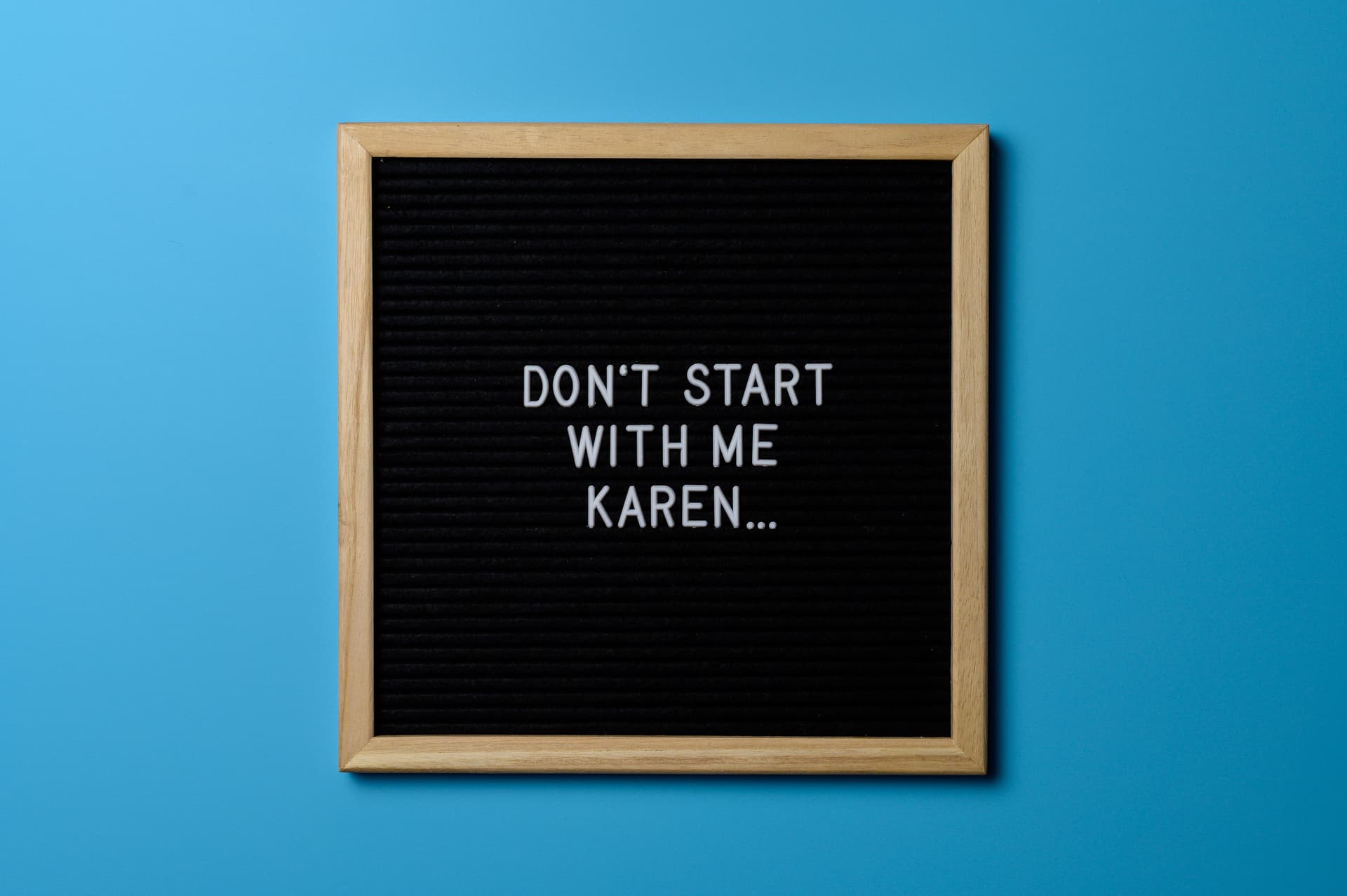
Nobody wants to be called a Karen. The term has become shorthand for unreasonable entitlement, the customer who demands a manager over a slightly cold coffee, the person who makes a scene in a queue. Social media loves a Karen. Comment sections fill up with mockery, the clips go viral, and everyone feels a little better about themselves for not being that person.
Here is the uncomfortable truth: Karen is the most valuable customer you have.
Not because she is right about everything. Not because every complaint deserves validation. But because an unhappy customer will tell you, with remarkable precision, exactly what is wrong with your business. A happy customer tells you nothing useful. They smile, they leave, they might come back. They offer no information you can act on. Karen, by contrast, has a detailed brief ready. She has identified the problem, experienced the failure firsthand, and formed a clear view of what should have happened instead. That is expensive research, delivered free of charge, and most businesses respond by rolling their eyes.
The instinct to dismiss unhappy customers is understandable. Nobody likes to hear that something they built or run is falling short. The sunk-cost thinking that afflicts internal CX reviews, the tendency to protect decisions already made, kicks in immediately. We hear the complaint through a filter of defensiveness rather than curiosity.
But if you can get past that instinct, the unhappy customer becomes the most honest signal your business receives.
The question is how to collect that signal in a way that is actually useful.
The problem with how we currently measure experience
Most businesses rely on NPS. You get an email after a transaction, a scale from zero to ten, and maybe a free text box that most people leave empty. The number goes into a dashboard. The dashboard gets presented in a quarterly review. And then, usually, not very much happens.
NPS has a structural problem: it tells you the temperature of the room but not where the fire is. An average score of seven across ten thousand responses is interesting as a trend line and nearly useless as a brief. You do not know which part of the experience drove the sevens. You do not know what the sixes experienced that the eights did not. You certainly do not know what one specific thing you could fix tomorrow that would move the number.
Vanity metrics feel reassuring and deliver very little.
What actually helps
We built the Worst Experience Indicator™ to answer the question NPS cannot: what was the single worst part?
The framework works around a Point of Experience, a specific moment in a customer journey, digital or physical. It captures sentiment before the experience, what the customer expected or anticipated, and sentiment after, what they actually felt. The delta between those two readings is the WXI score: a precise measure of where expectation met reality and lost.
But the number is only half of it. The other half is qualitative: one question asking the customer to name their single worst experience in that interaction. Not a list. Not a rating scale. One thing, in their own words.
That answer goes directly to the UX and product teams who can do something about it. Not as a number to report upward, but as a brief to act on.
You have to dare to ask
This is not a metric for businesses that want reassurance. If you run WXI, you will find out what is broken. You will hear things that are uncomfortable. Some of what you hear will sting.
That is the point.
The businesses that grow are the ones that treat unhappy customers as collaborators rather than problems to be managed. They ask the hard questions, they listen without defensiveness, and they fix what they find. They have learned, essentially, to appreciate their Karens.
So the next time someone asks to speak to a manager, consider listening properly before you send them upstairs. They might be about to tell you something worth knowing.
The Worst Experience Indicator™ is an Acoustic proprietary framework, available as part of a CX Review engagement or applied directly to an existing customer journey. Find out more at acoustic.sg