
From multidisciplinary teams to augmented humans.
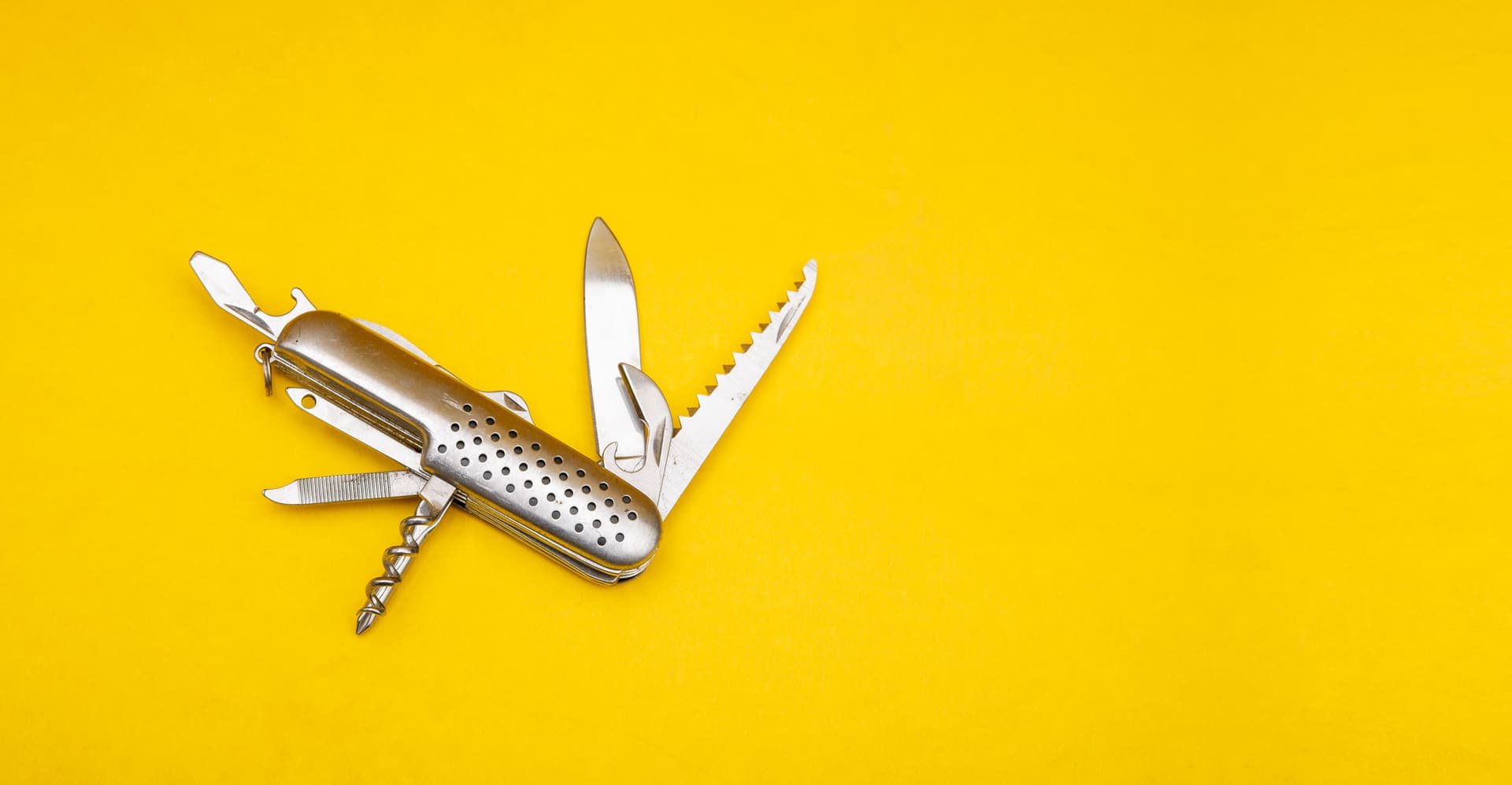
For a long time, the answer to a complex problem was a bigger team. A strategist, a designer, a developer, a copywriter, a project manager and an analyst, each a specialist, each handing work to the next. The logic was sound. Depth in any one field took years to build, so you assembled it from many people and managed the gaps between them.
Those gaps are where the cost lived. Every handover loses something. Intent gets summarised, context gets stripped out, and the person who understood the customer is rarely the person writing the code. Anyone who has run a project through five departments knows how the original idea looks by the time it ships.
AI changes the arithmetic. Not for everything, but enough to matter. Work that once justified a dedicated specialist can now be done by one person with the right tools: a working prototype, an analysis of a large data set, a competent first-pass design, a draft that is 80 per cent of the way there. Expertise still matters. Its place in the process has moved.
What Range got right
In Range, David Epstein makes the case that breadth beats narrow specialisation in far more situations than we assume. His central distinction is between kind and wicked learning environments. In a kind environment, such as chess or golf, the rules are clear, feedback is fast and patterns repeat. Early, intense specialisation works well there. In a wicked environment, the rules are unclear, feedback is delayed or misleading, and yesterday's pattern may not hold tomorrow. People who have sampled widely tend to do better in those conditions, because they can borrow an analogy from one field and apply it in another.
His most memorable comparison is between Tiger Woods, who started golf as a toddler, and Roger Federer, who played a range of sports as a child and settled on tennis later. Epstein also points to research suggesting that people who try many things before committing find a better fit between themselves and their work.
Business, customer behaviour and technology adoption are wicked environments. Markets shift, customers surprise you, and the playbook from your last project often fails on the next one. The people best placed to work in that terrain are the ones who have seen a lot of different problems and can recognise the shape of a new one.
Breadth meets augmentation
The traditional weakness of the generalist was production capacity. They understood many things but could not execute in all of them at specialist speed, so organisations built teams to fill the gap.
AI narrows that gap considerably. The generalist knows what to ask for, which analogy applies, and when an answer looks plausible but wrong. The tool supplies speed. Judgement stays with the person. This pairing matters because AI output without informed direction tends towards the average, and breadth is what lets you tell the difference between average and good.
There is a practical benefit too. One person who holds the customer's problem, the concept and the build in their head makes more coherent decisions than a chain of people each holding a piece. Fewer handovers mean less lost context, faster decisions and a finished product that still resembles the original intent.
None of this removes the need for specialists or for challenge from other people. Some problems call for deep expertise at specific moments, and good work benefits from a second pair of eyes. What changes is the default. Smaller, senior, broadly experienced teams, augmented by the right tools, can now deliver what once needed a department.
How we work at Acoustic
This is how we have set up Acoustic. We keep teams small and senior. The people who listen to your customers are the people who shape the concept, and they stay with the project through design and build. When a project needs deep specialist knowledge in payments, HR, marketing or technology, we bring in advisors with decades in that field.
Humanistic Thinking™ keeps the work anchored to the human problem at every stage: Listen, Feel, Think, Do. Around that sits the Augment layer, where AI tools lift the quality and speed of the work without taking the decisions that belong to people.
The technology will keep getting more capable. The question worth spending time on is what to point it at, and that question stays human. If you want to understand what a smaller, sharper, augmented team could do for your business, we would be glad to tal